
Turkmen Landscape Painting: Mountains, Colour and Memory
Can a mountain become a portrait, or a landscape preserve a memory? Explore Turkmen landscape painting through the expressive works of Amangeldi Hydyrov, where colour, nature and cultural heritage meet.
In 1983, a Turkmen painter found the face of a poet in the mountains.
Amangeldi Hydyrov saw something remarkable in the contours of the rocks: the likeness of Magtymguly Pyragy, the celebrated Turkmen poet and philosopher. The mountain was no longer simply a geological formation. Through the artist's vision, it became a portrait shaped by nature itself.
The painting, recalled during Hydyrov's 75th anniversary exhibition in 2026, reveals something essential about Turkmen landscape art. A landscape does not have to contain a human figure to tell a human story. Sometimes, the mountains themselves become the storytellers.
A Face Hidden in the Mountains
For many people encountering Turkmenistan for the first time, the country's most familiar landscape is the Karakum Desert. Yet beyond the dunes lies a remarkably varied natural world: the Kopetdag range, the Great and Little Balkan Mountains, rocky valleys, remote settlements and dramatic highland formations. These landscapes have provided Turkmen painters with subjects that extend far beyond geographical description.
Mountains can represent permanence, distance, solitude or belonging. Their changing silhouettes may evoke familiar faces or memories. A particular valley may carry associations with a poet, a village or a place of spiritual significance.
Hydyrov's interpretation of Magtymguly is a striking example.
The poet's image was not simply placed in front of the mountains as an additional subject. Instead, the natural formation itself suggested his presence. The relationship between portrait and landscape became inseparable.
In December 2023, an exhibition of artists from the Balkan Region in Ashgabat included Hydyrov's painting Magtymguly Pyragy, depicting mountain contours resembling the poet's profile. The work demonstrated how a recognisable natural feature could also become an image of cultural remembrance. This is an important distinction. A landscape painting can record what a place looks like, but it can also explore what that place means to the people who know it.
The exhibition also demonstrated the diversity of artistic practice in western Turkmenistan. More than 300 works by 31 artists were displayed, with landscapes appearing alongside portraits, sculpture, graphics and other forms of visual art. Nature was an important subject, but it was never the only artistic language of the region.
How Colour Changes the Meaning of a Landscape
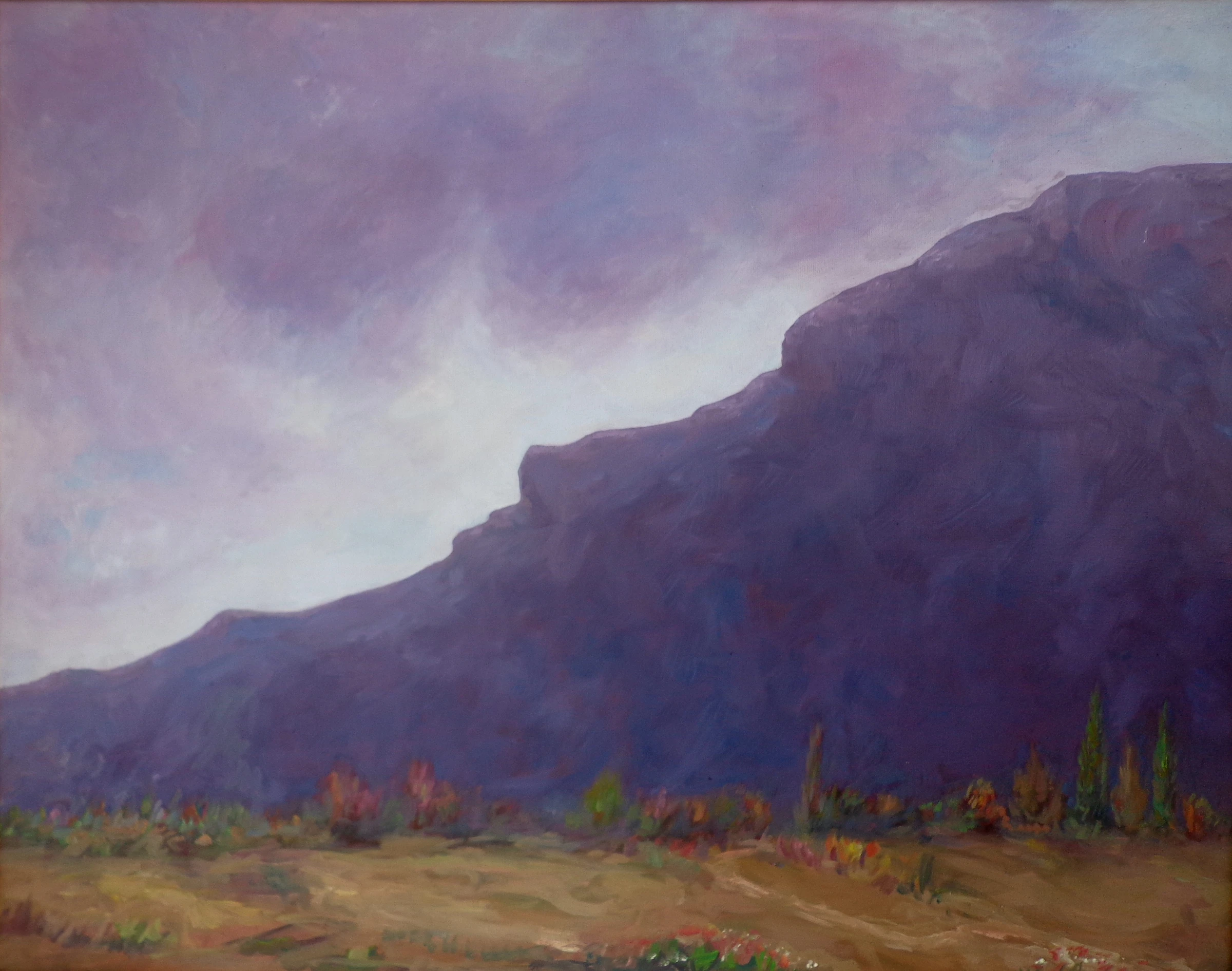
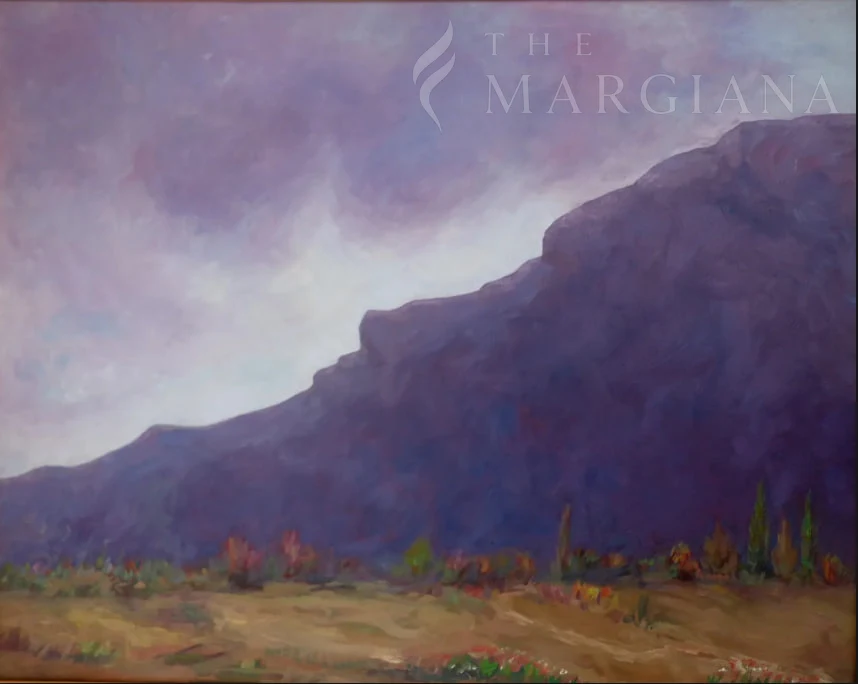
Consider Mountain Silhouette, one of Amangeldi Hydyrov's paintings presented by The Margiana. A broad violet mountain ridge dominates the composition. Its irregular outline rises beneath a subdued sky, while a narrow foreground of earth and vegetation provides a sense of scale. At first glance, the subject appears straightforward: a mountain viewed across an open landscape. But the painting becomes more interesting when we consider its arrangement of colour. The mountain is not rendered in a conventional sequence of brown rocks and grey shadows. Instead, violet and muted blue dominate the mass of the ridge. The contrast between its immense shape and the comparatively small foreground makes the mountain feel almost architectural.
There is little movement in the scene. Yet the silhouette itself carries an unusual presence. We may begin to see the mountain as something more than a physical object. Its shape encourages associations with the human figure, memory and imagination.
The important point is that Hydyrov leaves room for the viewer's own experience. Colour, in this sense, does not merely reproduce nature. It changes how nature is perceived.
Another Turkmen landscape painter, Valentin Kudryashov, approached the same challenge in a different way. His mountain paintings were known for transforming familiar locations through unexpected colours, including intense emerald greens and glowing orange tones. For both artists, the landscape offered possibilities beyond topographical accuracy. It could become a place where observation and imagination meet.
When a Village Becomes Part of the Mountains
Hydyrov's Dayna Village Beneath the Mountains offers a different experience. Unlike Mountain Silhouette, where the mountain occupies an almost solitary position, this painting draws our attention to a settlement within the landscape. Small buildings, winding paths and clusters of trees spread across the foreground. Behind them, distant mountain ridges appear in shifting shades of blue, violet and pale grey.
What makes the composition compelling is the relationship between the village and the surrounding terrain. The houses are small, but they are not insignificant. Warm touches of orange, red and yellow give the inhabited landscape a lively presence, while the mountains establish the larger setting. The village seems neither entirely separate from nature nor overwhelmed by it. This contrast provides another way of reading the painting. The mountains suggest endurance and scale; the village introduces the rhythms of everyday life.
The work also challenges the idea that landscape painting is simply the art of depicting unoccupied scenery. Human presence can be communicated through a road, a house, a cultivated field or a small settlement. A figure does not need to stand at the centre of the canvas for a painting to speak about people's relationship with the land. Dayna Village Beneath the Mountains is therefore both a landscape and an image of a place where life unfolds.
Texture, Movement and the Weight of Paint
The expressive character of Hydyrov's work becomes particularly visible in Echoes of the Mountains. Here, the mountains are constructed through forceful, overlapping passages of colour. Brown, ochre, green, white and darker tones interact across the surface, creating an impression of moving ridges and rocky formations. Rather than separating each natural element into neat outlines, the composition draws attention to the physical movement of paint.
This is one of the pleasures of looking closely at an original oil painting. From a distance, individual marks may combine into a recognisable landscape. At closer range, they reveal another experience: the artist's decisions, the direction of strokes, the relationship between thin and thick passages of colour, and the energy of the painted surface. The subject is no longer only the mountain. It is also the act of painting a mountain.
A quieter variation appears in Still Waters of Yasga Lake. The painting opens around a broad area of pale water, bordered by vegetation and low terrain. Softer colours and the reflective surface create a slower visual rhythm than the restless forms of Echoes of the Mountains.
Placed beside one another, these works show how different a landscape can feel even within the practice of a single artist. One composition seems to move through the force of its brushwork. Another encourages the eye to linger. Both invite attention to details that might otherwise pass unnoticed.
A Tradition Passed Between Generations
For Amangeldi Hydyrov, the landscapes of western Turkmenistan are closely connected to a lifetime of artistic practice. Born in 1951, he lives and works in Balkanabat and has long been associated with the region's mountains. His artistic career includes landscape painting, graphic work, portraiture and many years of art education. His influence also extends into his family.
His son, Dovran Hydyrov, is a landscape painter whose work is similarly connected to the mountains of the Balkan Region. According to a 2025 account of his artistic practice, father and son travelled through the surrounding mountain landscapes together. Yet their methods are not identical.
Dovran is particularly associated with the use of the palette knife, building textured rock formations through direct applications of paint. His landscapes frequently place dramatic skies above monumental mountain forms. The continuity between the two artists does not mean that they see nature in exactly the same way. Instead, their work demonstrates how a shared landscape can generate different artistic responses.
An exhibition in April 2026 at the Balkan Velayat Museum of History and Local Lore celebrated Amangeldi Hydyrov's 75th anniversary. The presentation included paintings from different stages of his career and reflected his decades of engagement with the natural environment. Among the ideas highlighted by the exhibition was the ability of a painted landscape to make an unfamiliar place feel immediate and meaningful to the viewer.
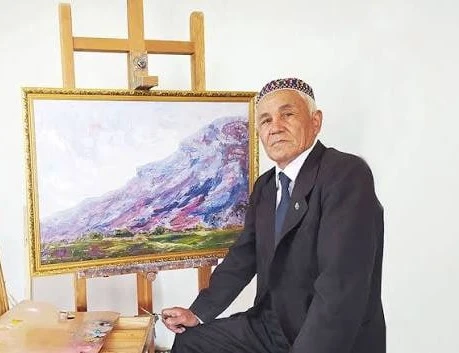
Turkmen painter Amangeldi Hydyrov is known for his mountain landscapes inspired by the scenery of western Turkmenistan. A member of the Union of Artists of Turkmenistan since 1988, he has participated in national and international exhibitions for more than four decades.
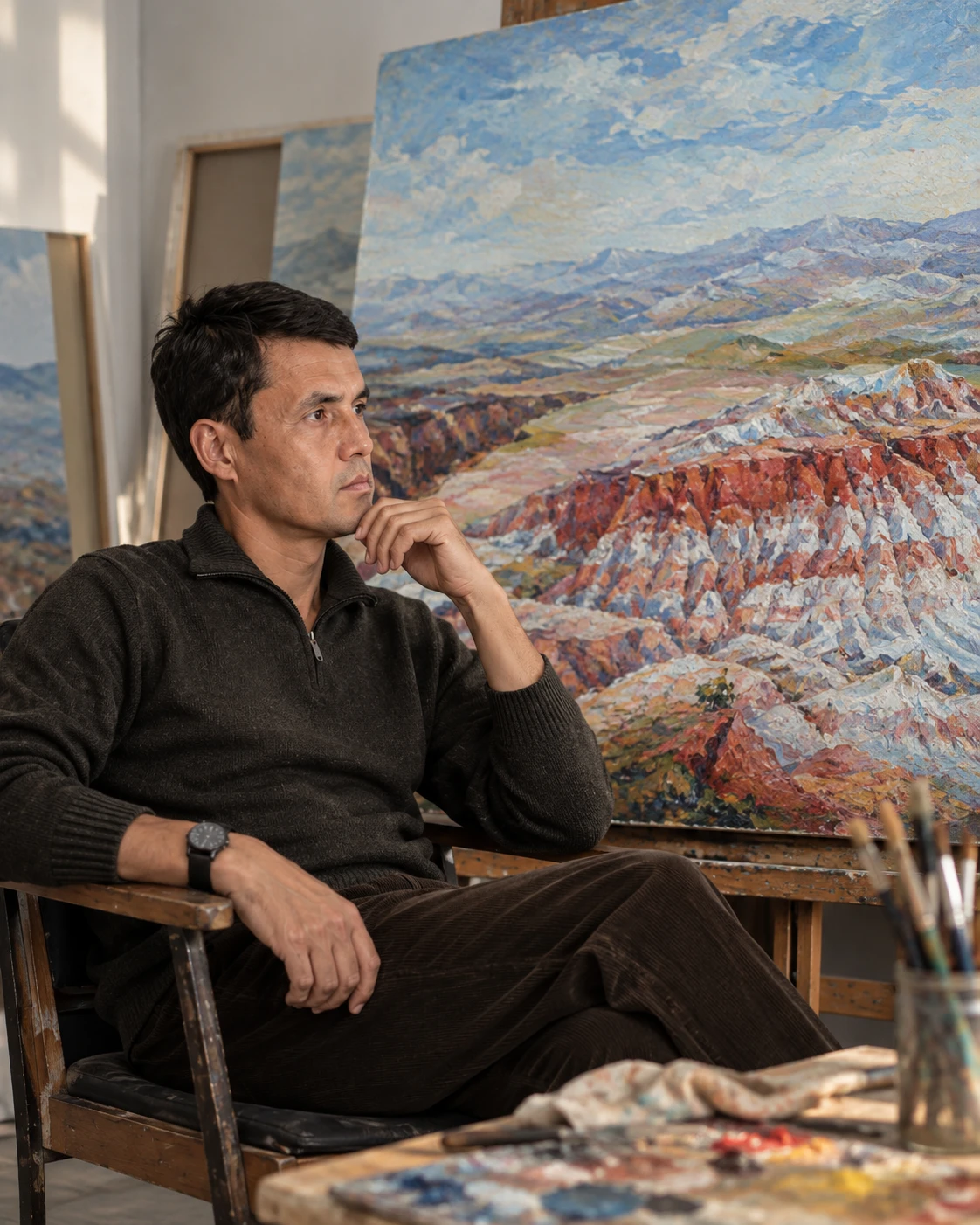
Dovran Hydyrov is a Turkmen landscape painter known for his expressive depictions of the country's mountains and dramatic skies. Working primarily with a palette knife, he creates richly textured compositions that explore the monumental beauty, atmosphere and spiritual significance of Turkmenistan's mountainous landscapes.
Mountain Silhouette
Amangeldi Hydyrov
Oil on canvas
View Artwork →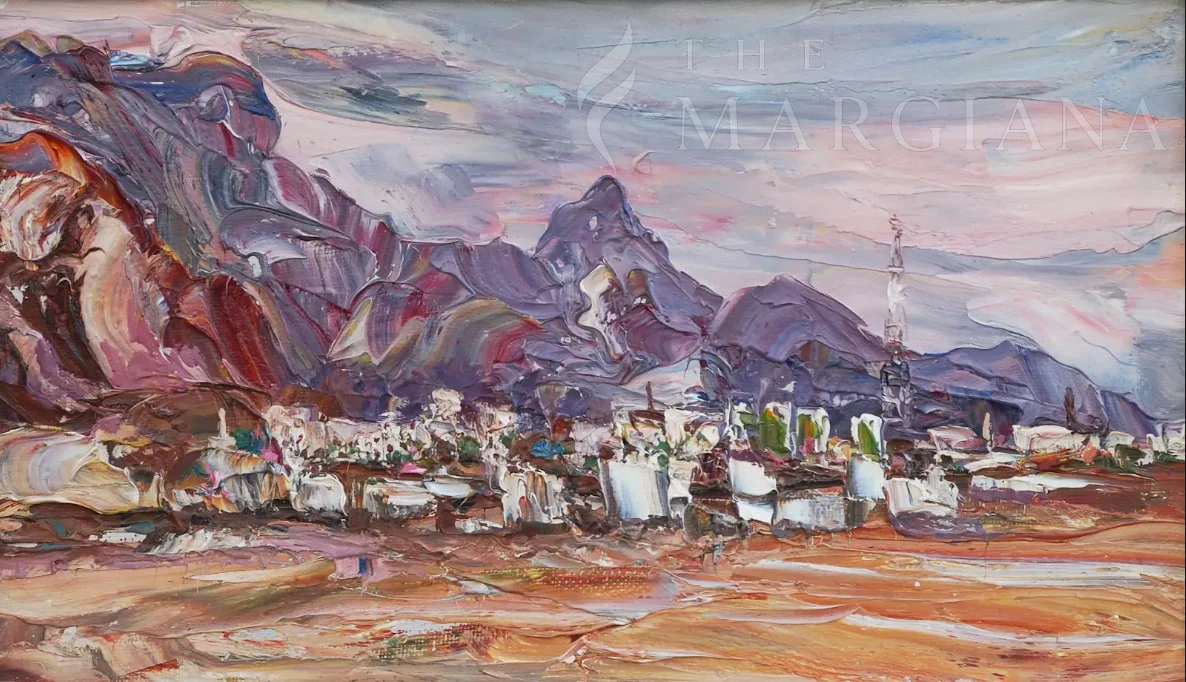
Balkanabat Foothills
Amangeldi Hydyrov
Oil on canvas · 2000
View Artwork →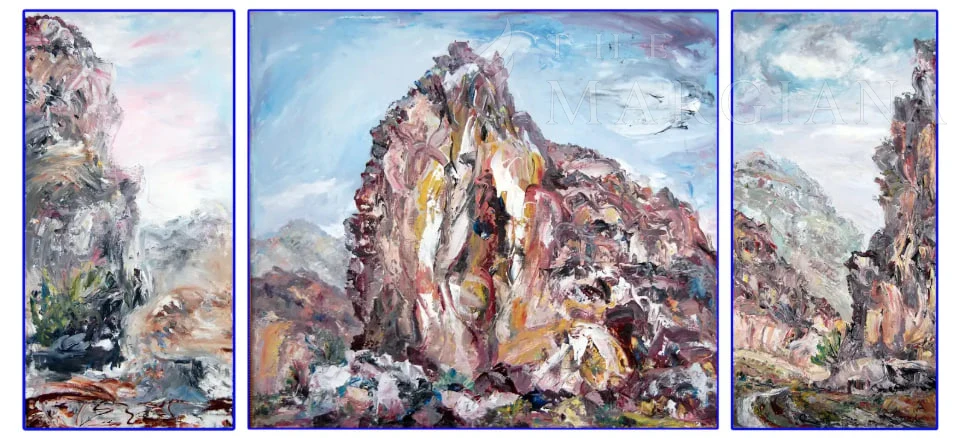
Melody of the Mountains (Triptych)
Amangeldi Hydyrov
Oil on canvas · 2008
View Artwork →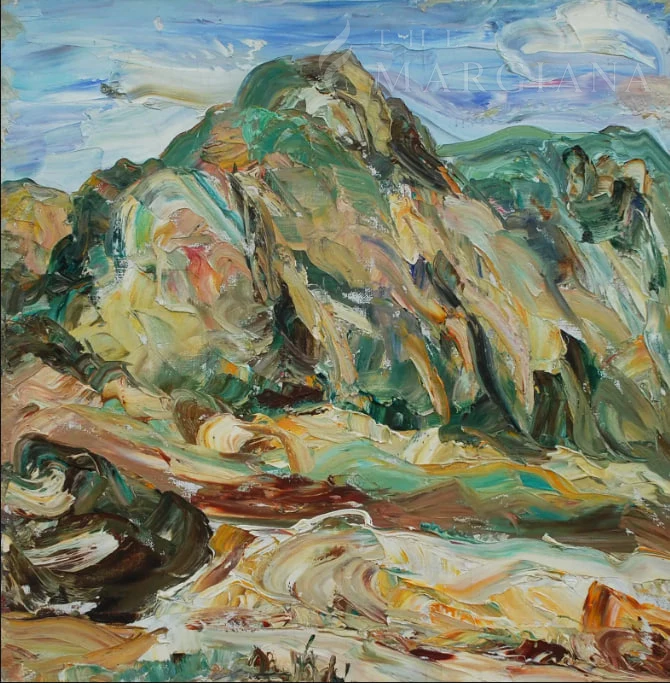
Mountain Forms
Amangeldi Hydyrov
Oil on canvas · 1998
View Artwork →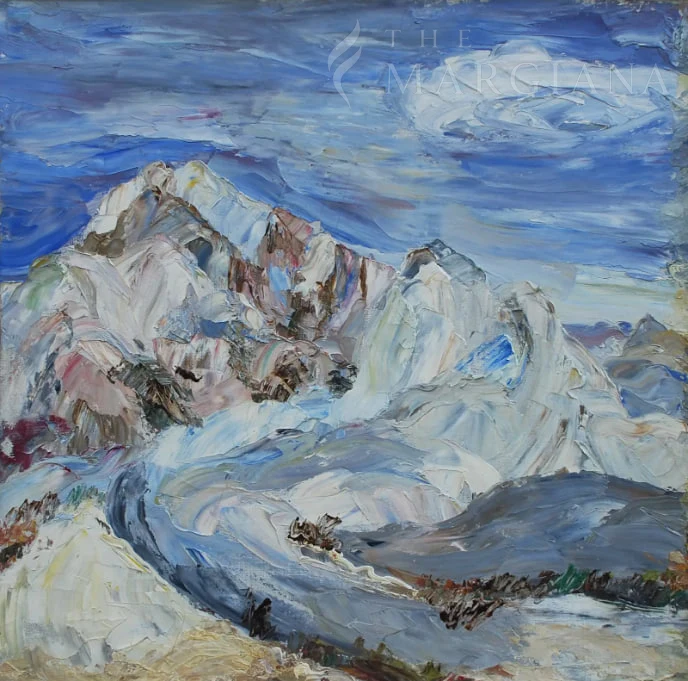
Moonlit Mountains
Amangeldi Hydyrov
Oil on canvas · 1998
View Artwork →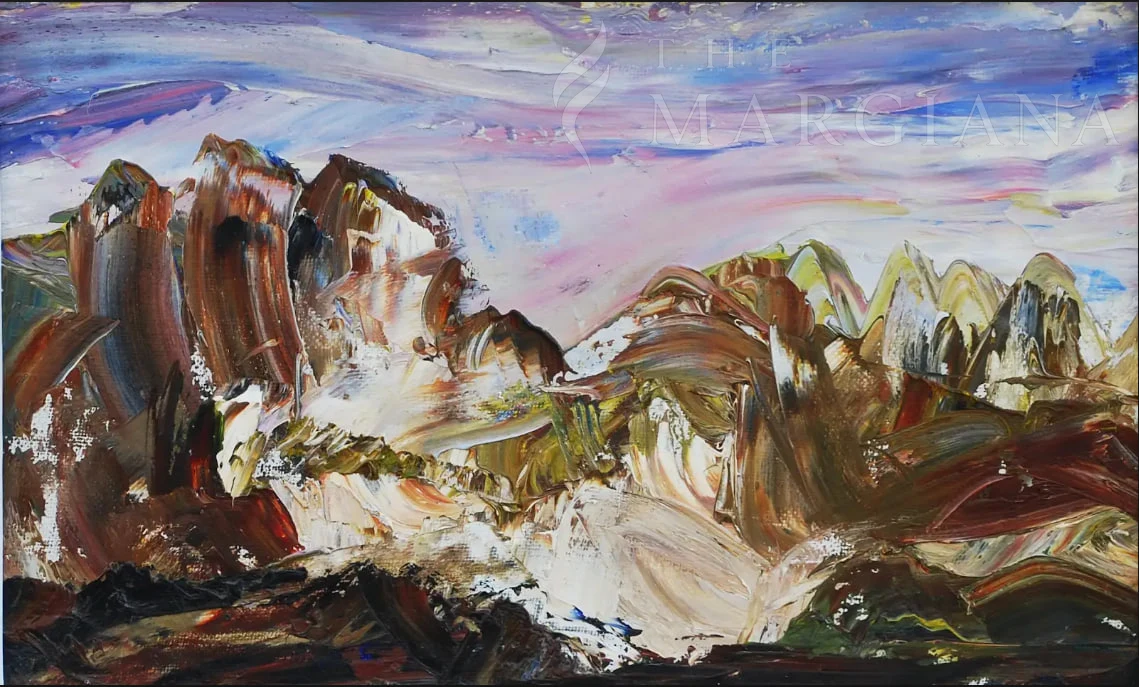
Echoes of the Mountains
Amangeldi Hydyrov
Oil on canvas · 2000
View Artwork →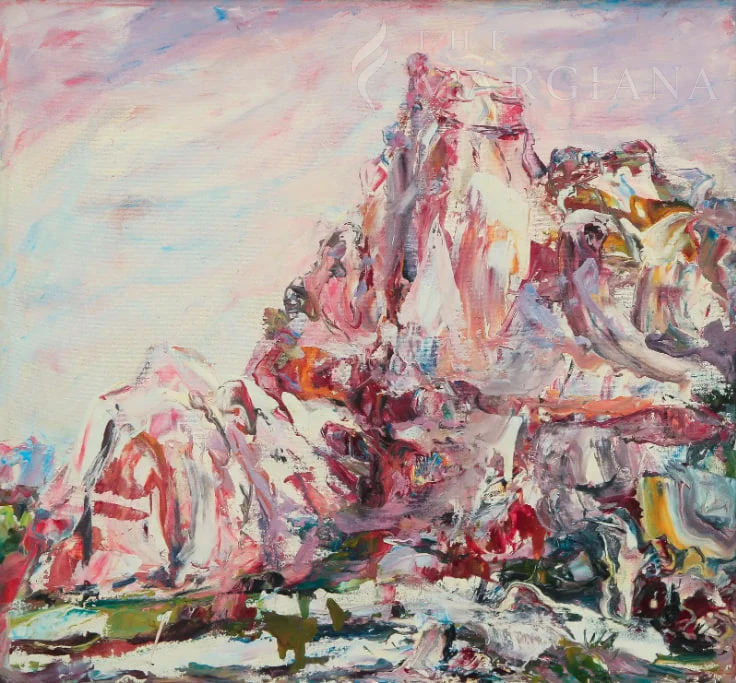
Rose-Coloured Cliffs of Gözli Ata
Amangeldi Hydyrov
Oil on canvas · 2023
View Artwork →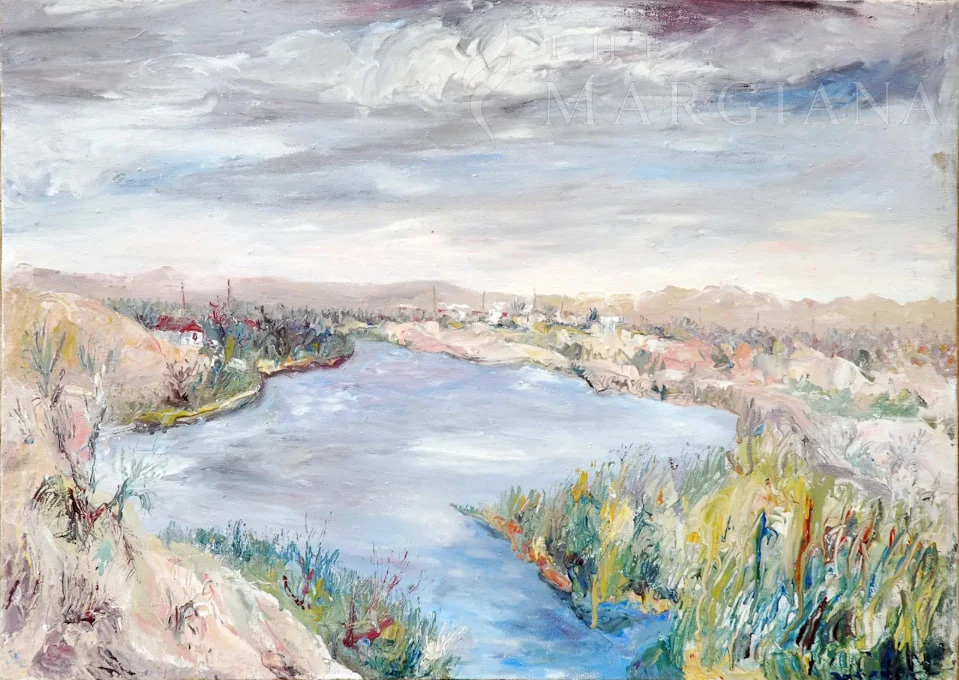
Still Waters of Yasga Lake
Amangeldi Hydyrov
Oil on canvas · 2009
View Artwork →
Rocky Coast of Gurzuf
Amangeldi Hydyrov
Oil on canvas · 1988
View Artwork →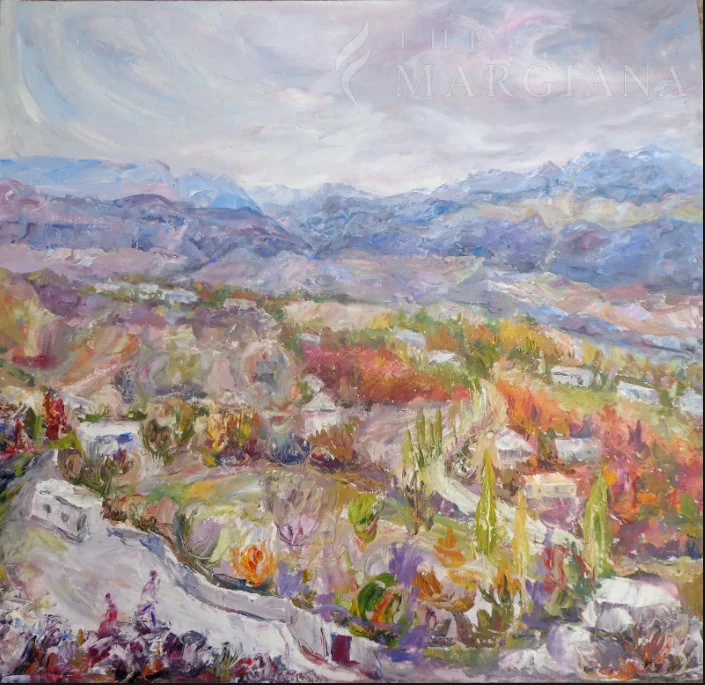
Dayna Village Beneath the Mountains
Amangeldi Hydyrov
Oil on canvas · 2013
View Artwork →