
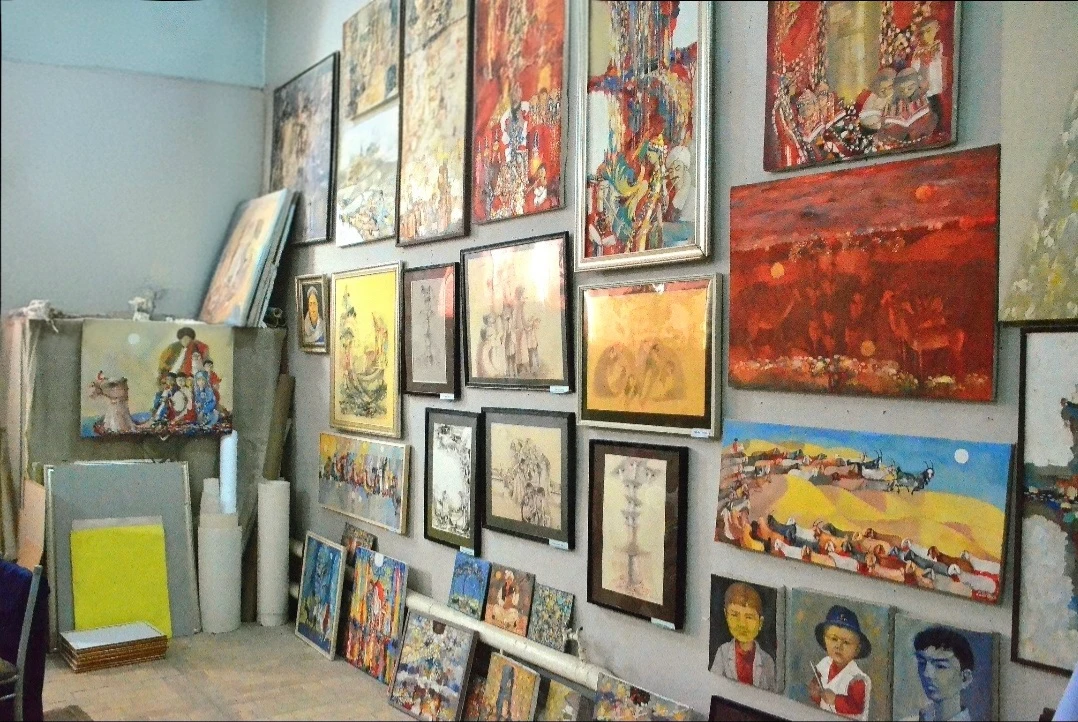
Inside Gurbangeldi Gurbanov's Studio
What happens inside the studio of an artist who never makes preliminary sketches? Paintings crowd every wall, and behind their bright colours lie childhood memories, family stories and a past that still finds its way onto the canvas.
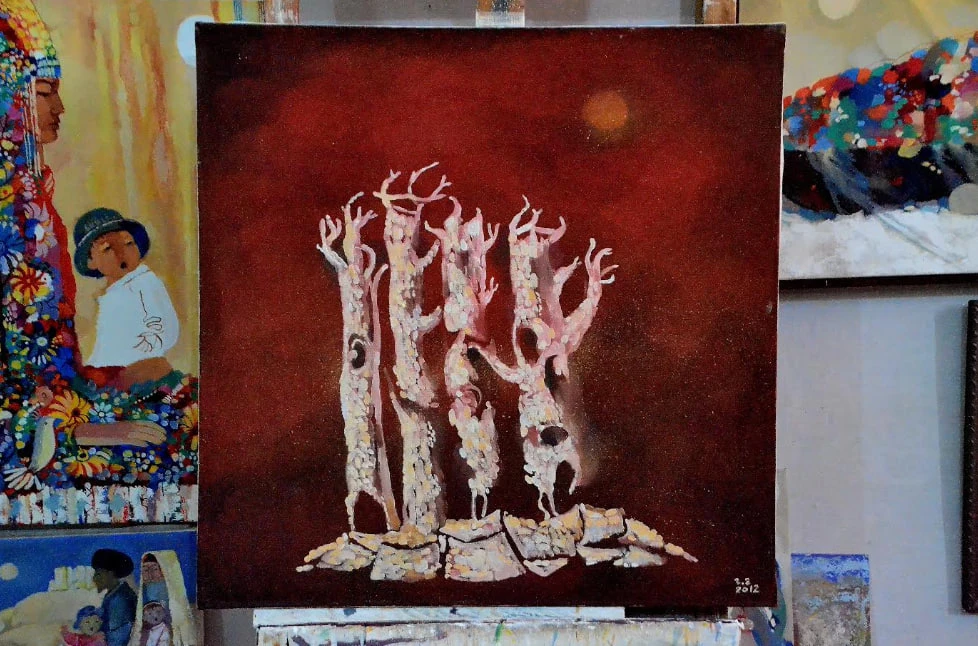
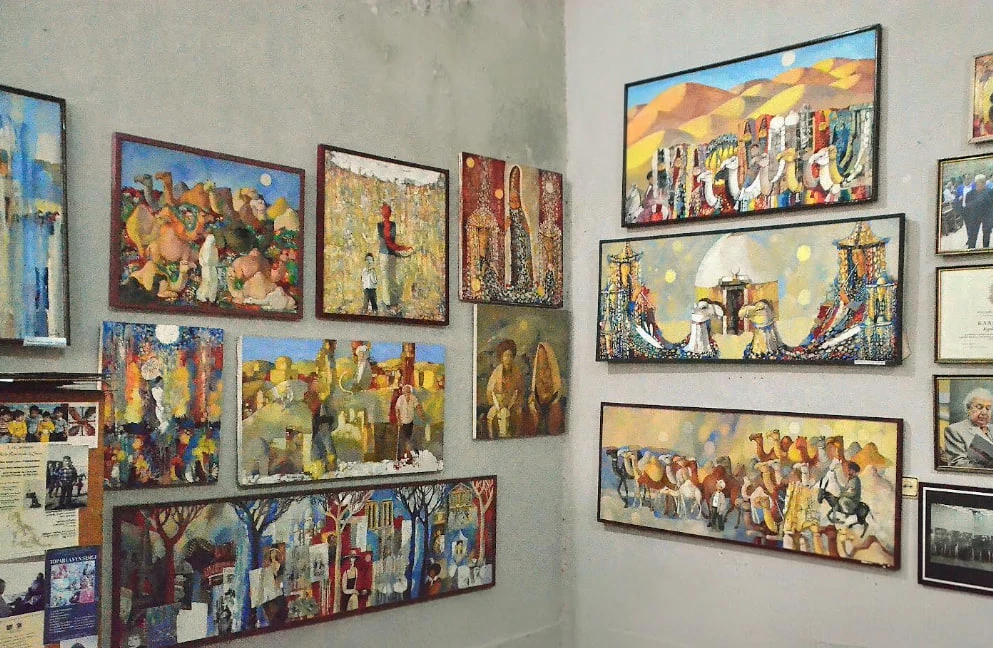
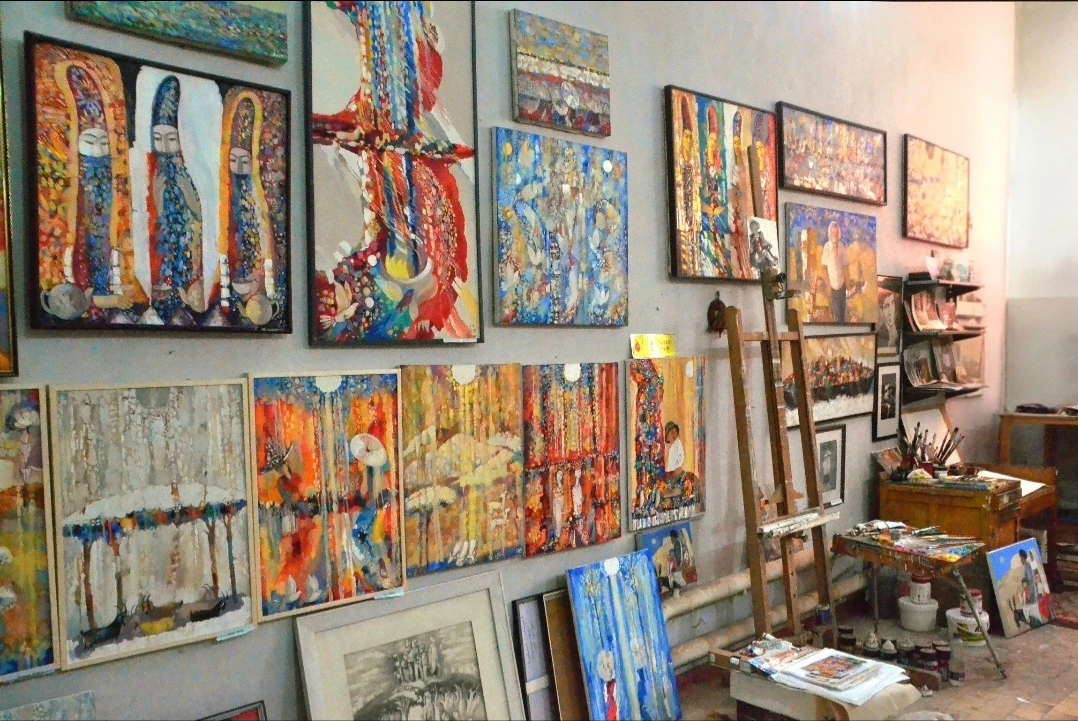
Gurbangeldi Gurbanov's studio is the kind of room where your eyes never settle. Paintings cover the walls, smaller works crowd the spaces between them, and more canvases stand below. In one photograph, a pale, tree-like shape stands out against a dark red background. Elsewhere, faces, figures and patches of bright colour compete for attention. It looks like a place full of plans. But Gurbanov has a surprising rule: he does not make preliminary sketches.
The Artist Who Starts Without a Sketch
Gurbanov studied painting at the Turkmen State Art College in Ashgabat from 1966 to 1970. Yet he later found his strongest voice in graphic art. At the Senezh workshops near Moscow, he worked in the group of Kazakh graphic artist Yevgeny Sidorkin, whom he considers a teacher. He explored lithography before turning to ink, pen and coloured pencil.
So why avoid sketches? In an interview with the magazine Turkmenistan, Gurbanov explained that preliminary drawings could trap him in endless decisions about what to add or remove. He wanted the freedom to let an image develop as he worked. Looking at his studio walls, that approach suddenly makes sense. Some compositions are dense with figures; others leave a single unusual shape to hold the viewer's attention. They do not seem interested in following one formula.
The Village That Follows Him Everywhere
There is another clue to his art in a word that appears beneath some of his works: Kese-yab. It is the name of the village in the Mary Region where he grew up. His grandmother invented fairy tales; his grandfather bred horses and taught him to ride. Decades later, the people, animals and everyday scenes of village life continue to return in his pictures.
As a boy, Gurbanov wanted to be a musician. An exhibition in Ashgabat changed his mind, but not his love of rhythm. It is easy to imagine music in the movement of his figures and in the way bright colours answer one another across a painting. This is one possible way to read his work, rather than a confirmed explanation of the artist's intentions.
Books gave him another path back to childhood. He has spoken warmly about Chingiz Aitmatov, especially The White Ship. Rather than merely illustrating the writer's stories, Gurbanov used them to revisit feelings and memories of his own. For him, the boundary between someone else's story and his personal experience could be surprisingly thin.
What Bright Colours Cannot Tell You
The joyful energy of the studio photographs does not reveal everything. Gurbanov lost his mother early. His uncle Ovezmurad went to war in 1943 and never returned; the family spent years hoping for news. In 1990, at an exhibition in Greece, Gurbanov presented Forty, a series of forty graphic sheets concerned with love, separation, hope and loss. Behind the colour and movement was someone who knew what waiting meant.
His work also resists neat categories. Though trained as a painter, he became known for graphics; some of those graphic pieces gradually turned into paintings. His 75th-anniversary exhibition in Ashgabat in April 2026 brought this restless mixture of line and colour into view.
Perhaps that is the best way to look at the photographs from his studio. Do not try to understand everything at once. Choose one image, follow a line or a face, then look again. The next story may be hiding just beside it.
For more about the artist and his work, visit Gurbangeldi Gurbanov's profile at The Margiana.
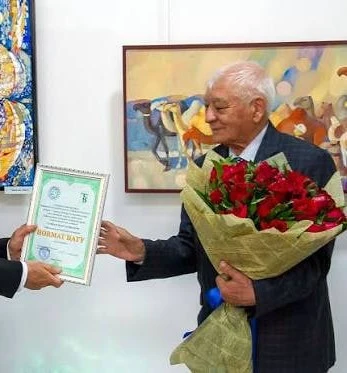
Turkmen graphic artist and painter Gurbangeldi Gurbanov is known for works that combine expressive drawing, colour and national themes interpreted through a contemporary artistic language. A People’s Artist of Turkmenistan, he is one of the established representatives of the Mary school of art.